


Freshwater Pearl Beads for Jewellery Making - A Baroque Keshi Buying Guide
A practical guide to buying and using natural cultured freshwater pearl beads for jewellery making - what baroque Keshi pearls are, how to grade them, and how to turn a 10-piece strand into finished pieces.
SHOPTHIVA Editors
What baroque Keshi freshwater pearls actually are
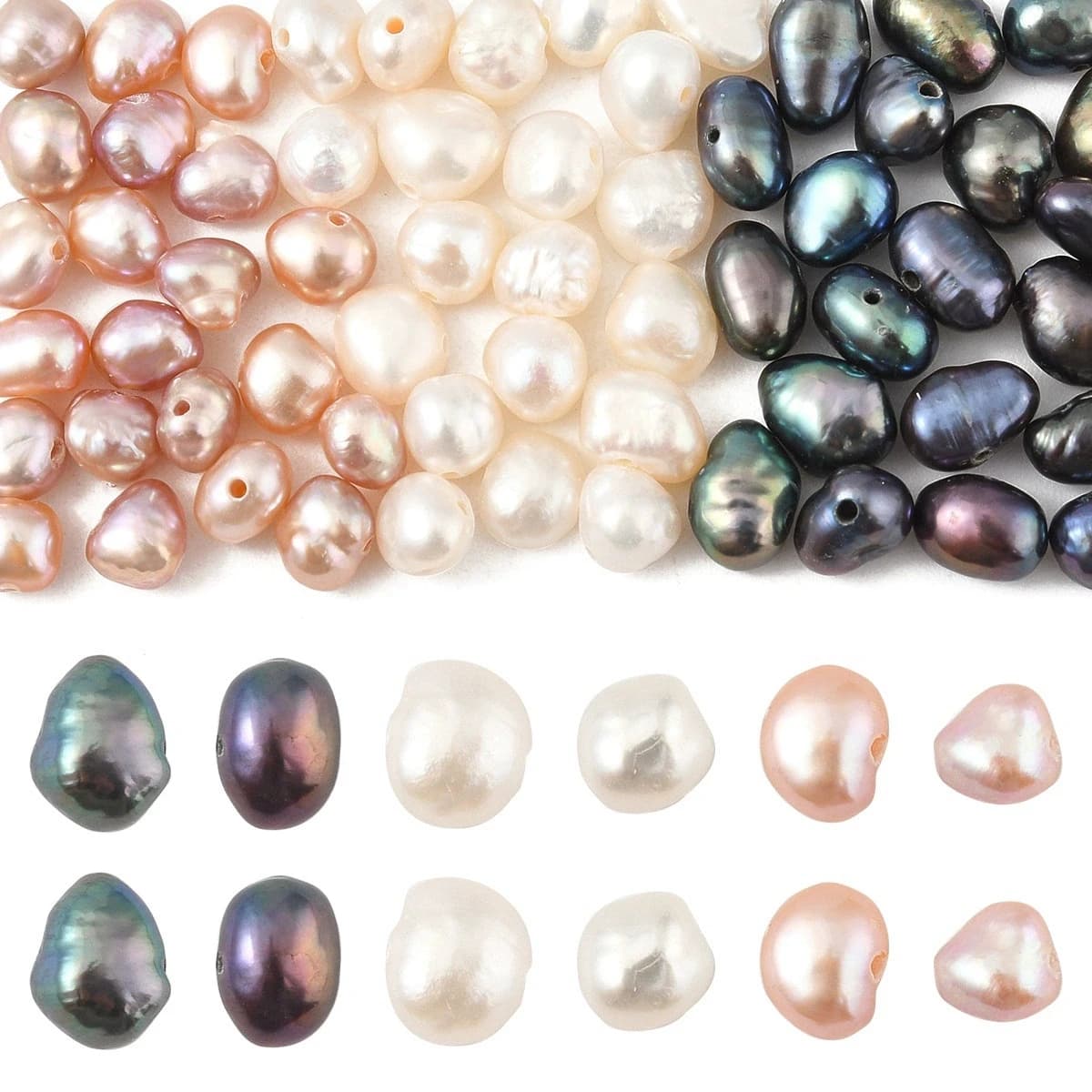
Baroque pearls are pearls that grow without a round nucleus, so each one takes an irregular, one-of-a-kind shape. Keshi pearls are a specific subtype: small, solid nacre pearls that form as a by-product inside a mollusc, with no bead nucleus at all. The result is a bead that is almost pure nacre, with a bright lustre and an organic silhouette that no two pieces share.
These are cultured pearls, not wild-caught. A technician seeds the mollusc and the animal does the rest, depositing layer after layer of nacre over many months. Because there is no round core forcing the shape, baroque Keshi beads come out flatter, potato-shaped, rice-shaped or slightly cross-shaped - the appeal is exactly that variation.
For jewellery making, that irregularity is the point. A strand of ten natural cultured freshwater pearl beads in baroque Keshi form gives you ten distinct silhouettes, which is what makes hand-strung pearl pieces look handmade rather than moulded. The Gemological Institute of America classifies freshwater cultured pearls separately from akoya and South Sea types, and Keshi sits within that freshwater family.
How to grade and pick good freshwater pearl beads
When you are buying loose pearl beads for craft work, four things matter: shape, surface, lustre and drill. Shape is subjective - baroque buyers want irregular, but you still want a shape that sits well in a design, not a thin sliver that will crack when strung. Surface should be mostly clean; a few natural growth marks are normal on real nacre, but deep pits or chalky patches waste a bead.
Lustre is the single biggest quality signal. Hold a pearl under a daylight lamp and look for a sharp, mirror-like reflection on the surface. Dull, chalky beads are either low-nacre or have been stored badly. A good baroque Keshi bead should reflect your surrounding clearly even on its curved flank.
Check the drill hole too. A clean, centred hole means the bead will hang straight on a strand or wire. Off-centre or rough drills cause the bead to twist, which is the difference between a necklace that lies flat and one that keeps flipping over. The 10-piece baroque Keshi set at SHOPTHIVA comes pre-drilled, so you can string them straight onto silk thread, beading wire or headpins without re-drilling.
Three easy jewellery projects you can make with ten pearl beads
Ten beads is a versatile starter count. With a single 10-piece pack you can build a layered pearl pendant necklace, a pair of drop earrings with matching studs, or a slim charm bracelet. None of these need specialist tools beyond round-nose pliers, wire cutters, beading wire or silk thread, and a handful of findings.
For a pendant, thread one larger Keshi bead onto a headpin, form a wrapped loop with pliers, and hang it from a fine chain. The irregular baroque shape means the pendant sits uniquely each time - no two finished pieces will look the same. Add two smaller beads as accent drops on either side for a three-stone cluster.
For earrings, pair two similarly shaped Keshi beads on French hooks. Because baroque pearls are never identical, pick two that echo each other rather than trying to match them exactly - that slight asymmetry is what makes handmade pearl earrings read as artisan rather than factory-made. The Wikipedia article on baroque pearls has useful historical context on why jewellers have always prized that asymmetry.
Stringing, knotting and finishing techniques
There are two common ways to string pearl beads: on beading wire (multi-strand stainless steel coated in nylon) with crimp beads, or on silk thread with traditional hand-knotting between each bead. Wire is faster and stronger for everyday bracelets; silk knotting is the classic method for pearl necklaces because the knots stop beads scattering if the thread breaks, and the silk gives a soft, professional drape.
For baroque Keshi beads specifically, use a thin beading wire or size D silk thread because the drill holes on freshwater pearls are usually narrow - around 0.6 to 0.8 mm. Always thread a pearl onto the wire or thread before attaching your clasp, so you know the bead sits flush and the hole is not too small for your stringing material.
Finish with a sterling silver or gold-filled clasp and a pair of french wire (bullion) guards to stop the clasp loop from cutting into the thread over time. A single 10-piece pack of baroque Keshi freshwater pearls at £13.99 is enough for one finished necklace or two pairs of earrings plus a bracelet charm, with a couple of beads left over for repairs.
Caring for cultured freshwater pearl jewellery
Pearls are softer than most gemstones - around 2.5 to 4.5 on the Mohs scale - so they scratch easily and are sensitive to acids, perfumes and sweat. The rule every pearl jewellery maker should pass on to the wearer is the same: pearls go on last, come off first. Apply perfume, hairspray and lotion before putting on pearl pieces, and wipe the pearls with a soft damp cloth after each wear.
Store finished pearl jewellery flat in a soft pouch or lined box, separate from harder stones and metals. Never store pearls in an airtight plastic bag - cultured pearls contain a small amount of natural moisture and need some ambient humidity, or the nacre can dry out and crack over time.
For cleaning, use lukewarm water with a drop of mild soap and a soft cloth only. Never use ultrasonic cleaners, steam cleaners or jewellery dips on pearls, as these will damage the nacre. If you re-string a piece every year or two, the silk stays fresh and the beads stay secure - which is the single best longevity tip for any hand-strung pearl jewellery.
Featured in this article
Frequently asked questions
Are baroque Keshi pearls real pearls?
Yes. Keshi pearls are solid nacre cultured pearls formed inside a freshwater mollusc without a round bead nucleus. They are genuine cultured pearls, not imitation, and because they are almost pure nacre they tend to have a brighter lustre than many nucleated pearls.
How many pearl beads do I need for a necklace?
A full 16-inch choker needs around 40 to 50 pearls depending on size, so a 10-piece pack is best for a pendant, a Y-drop, a pair of earrings, or a charm bracelet rather than a full strand. Buy two or three packs if you want a complete necklace.
What size drill hole do freshwater pearl beads have?
Most loose freshwater pearl beads for jewellery making are drilled with a hole around 0.6 to 0.8 mm, which fits size D silk thread, fine beading wire, or 24-gauge headpins and eye pins. Check the listing specs before buying if you plan to use thicker cord.
Can beginners string pearl beads at home?
Yes. You only need round-nose pliers, wire cutters, beading wire or silk thread, and a clasp. Start with a simple pendant on a headpin before moving to knotted silk strands, which take a little practice but need no specialist equipment.
Product gallery
Further reading