


What the 925 Hallmark Actually Means (And Why It Matters)
The number stamped inside a ring is the single most useful thing on it, and most people have no idea what it certifies. Here is what 925 means, how to spot plated metal sold as solid, and why tarnish is a sign of the real thing.
SHOPTHIVA Editors
Quick takeaways
925 means 92.5% pure silver. The remaining 7.5% is usually copper, added because pure silver is far too soft to hold a setting. Tarnish is proof, not a defect. It is the copper reacting with sulphur in the air, plated costume metal often will not tarnish at all, it just wears through. Plated is not sterling. 'Silver-tone', 'silver-plated' and '925-plated' all describe a thin coating over a base metal. Only a 925 stamp on solid metal means sterling throughout. Sterling is usually fine for sensitive ears because it contains no nickel, which is the metal most people actually react to.
Where the number comes from
Sterling is an alloy standard, not a brand. Pure silver, 999, is soft enough to bend between your fingers, which makes it useless for a ring shank or a claw setting that has to grip a stone. Alloying it with copper at 92.5% silver to 7.5% copper produces a metal hard enough to work with while staying bright and white.
That 92.5 figure is where the 925 stamp comes from, and it has been the English standard since the 12th century. When you see 925 stamped inside a band or on the tag of a chain, it is a claim about the composition of the whole piece, not a surface treatment.
Sterling versus plated: how to tell
The most common thing sold as silver is not silver. Plating deposits a microscopically thin layer of silver over brass, copper or steel. It looks identical when new and costs a fraction to produce.
Look for the stamp. Sterling is marked 925, sometimes STER or STG. It is usually inside a ring band, on the clasp tab of a chain, or on the post of an earring. No mark is a strong signal.
Check the wear points. Plated jewellery goes patchy at the high points first, the underside of a ring, the edge of a clasp, and what shows through is yellow or pink base metal, not darker silver.
Watch how it ages. Sterling darkens evenly and polishes back. Plating does not tarnish; it wears off.
Magnets. Silver is not magnetic. If a piece jumps to a magnet there is a ferrous core under the finish. A negative result is not proof on its own, since brass is not magnetic either, but a positive result is decisive.
Why it tarnishes, and what to do
Tarnish is silver sulphide, formed when the copper and silver react with trace sulphur compounds in air. Humidity accelerates it, and so do some surprising things: rubber bands, wool, certain papers, and the sulphur in eggs and onions.
None of it harms the metal. A soft cloth removes light tarnish in seconds; a proper silver polishing cloth handles heavier build-up. Avoid abrasive pastes and toothpaste, which cut fine scratches into the surface and dull the finish over time.
Storage does more than cleaning. Keep pieces in a closed bag or a lined box with the air pushed out, and away from bathroom humidity. Jewellery worn regularly tarnishes less, because skin contact keeps polishing it.
Put jewellery on last when getting ready and take it off first. Perfume, hairspray, sunscreen and chlorine all speed up the reaction.
What to buy first
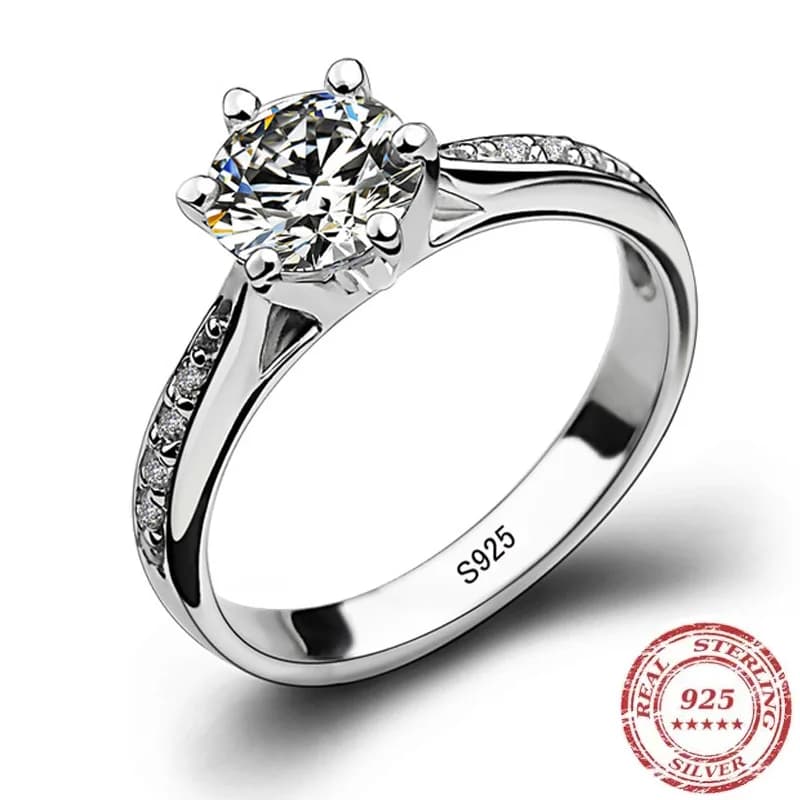
A plain sterling ring or a pair of hoops is the most useful starting point, because both go with everything and neither dates. The 925 Sterling Silver Classic Ring is a six-claw solitaire, a shape that has been in continuous production for over a century precisely because it does not fall out of fashion.
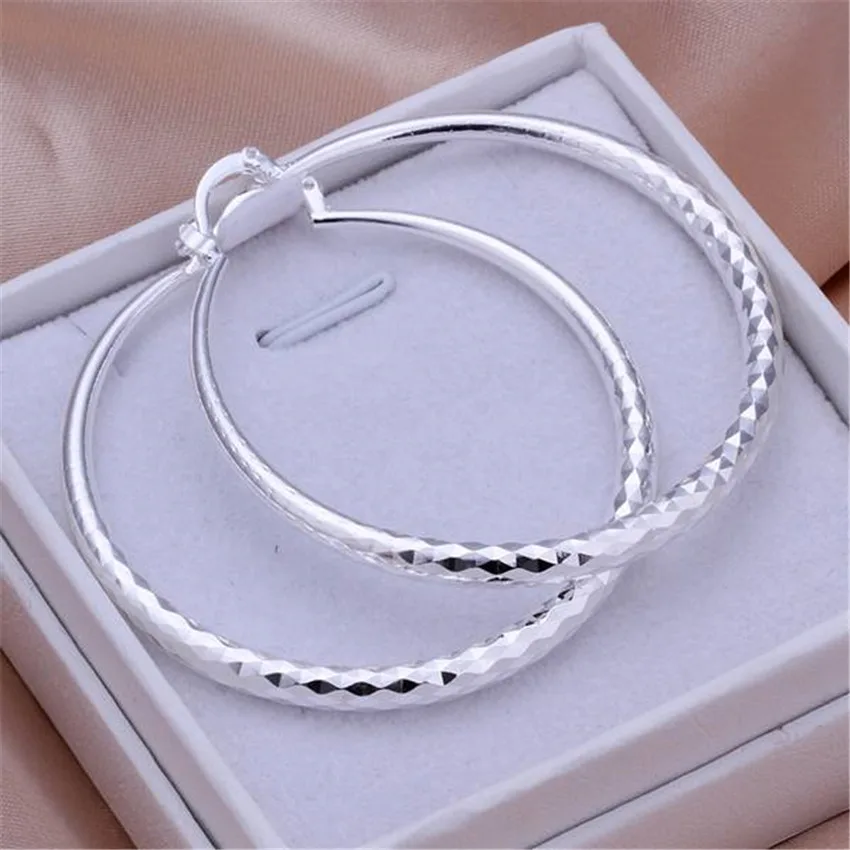
For earrings, sterling hoops are the workhorse. Sterling posts are also the reason a lot of people who 'react to earrings' can wear them comfortably: the usual culprit is nickel, which sterling does not contain.
Sizing is the one thing worth care with rings bought online. Measure an existing ring's internal diameter rather than your finger, and measure at the end of the day when fingers are at their largest.
Featured in this article
Frequently asked questions
Does 925 sterling silver tarnish?
Yes, and that is normal. The copper in the alloy reacts with sulphur in the air to form a dark surface layer. It polishes off with a soft cloth and does not damage the metal. Jewellery that never tarnishes at all is usually plated or a silver-coloured alloy.
Is sterling silver good for sensitive skin?
Generally yes. Sterling is silver and copper with no nickel, and nickel is the metal most contact allergies are actually to. If you react to costume earrings but not to sterling posts, that is why.
Can you shower or swim in sterling silver?
You can shower in it, though soap residue dulls the finish. Avoid swimming pools and hot tubs, chlorine attacks the alloy and can leave permanent discolouration. Take it off for the sea, too.
How do I know a piece is really sterling?
Look for a 925, STER or STG stamp on the band, clasp or earring post. Check whether wear points show yellow or pink base metal underneath. A magnet test rules out a steel core, though it cannot distinguish silver from brass on its own.
Product gallery
Further reading