

Breathable Car Seat Covers UK: Keeping Your Cabin Cool on Long Summer Drives
Racing drivers like Charles Leclerc endure extreme cabin heat, and UK motorists face the same problem in summer. Here's how breathable car seat covers protect your seats and keep you comfortable.
SHOPTHIVA Editors
What Racing Cabin Heat Teaches Us About Everyday Driving
Formula 1 drivers like Charles Leclerc regularly sit in cockpit temperatures exceeding 40 degrees Celsius, wearing fire-resistant overalls and a helmet, for ninety minutes at a time. The physical toll of that heat is immense, and the engineering solutions that racing teams use to manage it, from breathable suit materials to airflow channeling, have parallels in the products available to everyday drivers. While UK summer temperatures are far more modest, a car left in direct sunlight can easily reach cabin temperatures of 50 degrees or more, making the driving experience deeply uncomfortable.
The search interest around Charles Leclerc and other F1 names often extends beyond race results into curiosity about the physical demands of motorsport. That curiosity translates into practical questions for car owners: how do you stay comfortable in a hot vehicle, and how do you protect your interior from the wear and tear that heat and sweat cause over time? The answer for most UK drivers is not a custom ventilation system but a set of breathable seat covers that create a buffer between your body and the upholstery.
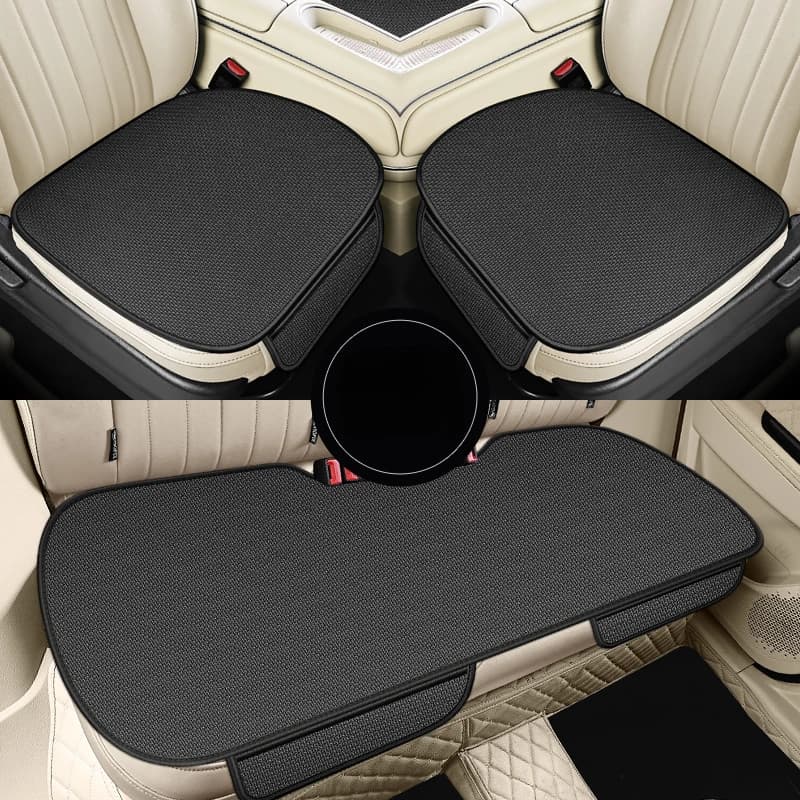
Leather and synthetic leather seats are particularly problematic in summer because they absorb heat and hold it against your skin. Fabric seats are better but still trap warmth and moisture. A breathable cover like the Cool Car Seat Cover at £19.99 sits on top of your existing upholstery and allows air to circulate between you and the seat surface, dramatically reducing the sensation of sitting on a hot, sticky panel during the warmer months.
Why Breathable Fabric Matters for Car Seat Covers
The material of a car seat cover determines almost everything about how it performs. A breathable fabric allows air to pass through its structure, which means heat from your body dissipates rather than building up between you and the seat. This is the same principle that makes mesh running shoes cooler than leather ones. The Cool Car Seat Cover uses a breathable fabric construction that is specifically designed to address the heat buildup problem that affects most standard car interiors during warmer months.
Non-breathable covers, such as those made from PVC or cheap synthetic leather, can actually make the problem worse. They trap heat and moisture against your body, creating a greenhouse effect that leaves you sweatier than you would be sitting on the bare seat. In the UK, where drivers may not think of cabin heat as a major issue, it is easy to buy a cover based on appearance alone and end up with something that makes summer drives miserable. Checking the material description for breathable or mesh fabric before buying saves this frustration.
Breathable fabric also dries faster than solid materials. If you get caught in a rainstorm and sit in your car with wet clothes, or if you spill a drink, a breathable cover allows the moisture to evaporate rather than pooling underneath you. Over the long term, this moisture management extends the life of both the cover and the seat beneath it, because dampness trapped against upholstery leads to mould, odour, and eventual material degradation that is expensive to fix.
Protecting Your Seats from Daily Wear and Tear
Car seats take a remarkable amount of punishment over their lifespan. Every time you get in and out, friction wears at the side bolsters. Keys, belt buckles, and bag straps scrape across the surface. Sunlight fades the fabric or leather, and body oils gradually break down the material in the areas that make the most contact. A seat cover acts as a sacrificial layer that absorbs all of this damage, preserving the original upholstery underneath. At £19.99, the Cool Car Seat Cover costs a fraction of what reupholstering or replacing a worn seat would cost.
For drivers who use their car for work, ferry children, or transport pets, the case for seat covers becomes even stronger. Muddy sports kit, food crumbs, and pet hair are far easier to deal with when they land on a removable cover than when they embed themselves directly into the seat fabric. Most breathable covers can be removed and washed, which means a quick refresh is possible whenever the interior starts looking tired. This is particularly valuable for families where the back seat sees constant use from children and their belongings.
Resale value is another consideration that is often overlooked. A car with pristine, unmarked seats will command a higher price and sell faster than one with worn, stained upholstery. Buyers inspect seats closely because they are the most visible and most touched part of the interior. Investing in covers from the start means that when it comes time to sell, the seats underneath look nearly new, and you can either leave the covers on as a selling point or remove them to reveal immaculate original fabric.
Installation and Fit: What to Expect
Most breathable car seat covers are designed for straightforward installation without tools. They typically use elastic straps with hooks that anchor under the seat, along with slip-over sections that pull down over the headrest. The Cool Car Seat Cover is built to this standard, meaning you can fit it in a few minutes in a car park or driveway without any mechanical know-how. The cover is designed for front seats but also works for rear seats, giving you full-cabin protection if you buy multiple units.
Fit quality matters because a loose cover shifts around while you drive, creating wrinkles that are uncomfortable to sit on and that wear through faster. Look for covers with adjustable straps that let you tension the fabric across the seat base and backrest. The goal is a snug, tailored fit that stays put even during energetic driving or when multiple passengers use the seat throughout the day. A cover that bunches up at the edges will also look untidy, undermining the purpose of fitting it in the first place.
Compatibility with side airbags is a critical safety consideration. Modern cars have side airbags built into the seat bolsters, and a cover that blocks or interferes with airbag deployment is a serious safety risk. Check that any cover you buy is labelled as airbag-compatible or has stitching designed to break open at the airbag deployment point. This is not a corner to cut. If a cover does not explicitly mention airbag compatibility, it is safer to choose a different product that does.
Year-Round Benefits Beyond Summer
While breathable covers are most obviously useful in summer, they provide benefits throughout the year. In winter, a fabric cover is warmer to sit on than cold leather, which in the UK can be a genuinely unpleasant experience on a January morning. The breathable layer also prevents the cold, stiff feeling of vinyl or leather seats in low temperatures, making the first few minutes of a winter drive far more comfortable than sitting directly on the original upholstery.
In spring and autumn, when the weather swings between warm and cool within the same day, breathable covers adapt better than non-breathable alternatives. They do not overheat when the sun comes out, and they do not feel icy when the temperature drops. This versatility makes them a genuine all-season accessory rather than a summer-only purchase, which adds to their value over the typical lifespan of a car interior that may last for years.
For drivers who spend long hours behind the wheel, whether commuting or travelling, the cumulative comfort benefit of a breathable cover is substantial. Reduced heat, better moisture management, and a softer sitting surface all contribute to less fatigue and a more pleasant journey. Racing drivers invest heavily in managing their physical environment for performance reasons, but the same principles apply to everyday driving. Comfort is not just a luxury but a factor in alertness and safety, and a good seat cover is one of the simplest, most affordable ways to improve it.
Featured in this article
Frequently asked questions
Do breathable car seat covers fit all car models?
Most breathable car seat covers are designed with universal fit using elastic straps and adjustable hooks that accommodate a wide range of seat shapes. They fit the majority of standard front seats in hatchbacks, saloons, and SUVs. However, heavily contoured sports seats or seats with integrated headrests may require a model-specific cover. Always check the product dimensions and compatibility notes before purchasing. The Cool Car Seat Cover at £19.99 uses a universal fit design suitable for most UK vehicles.
Can I wash breathable car seat covers?
Yes, most breathable fabric seat covers can be removed and washed. Check the care instructions for the specific product, but many are machine washable on a gentle cycle with mild detergent. Air drying is usually recommended to preserve the fabric structure and elasticity. Regular washing every few months keeps the covers fresh and removes accumulated dust, sweat, and odours. This is one of the key advantages of removable covers over fixed upholstery, which cannot be easily cleaned.
Will a seat cover interfere with my car's side airbags?
This is an important safety question. Quality seat covers are designed with airbag-compatible stitching that allows side airbags to deploy normally. Look for covers that explicitly state airbag compatibility in their description. Covers that fully enclose the side bolsters without breakaway stitching can be dangerous. If a cover does not mention airbag safety, do not risk it. Always verify compatibility with your specific vehicle before fitting any seat cover.