




Kitchen Knife Sharpener for Home Cooking: A UK Buying Guide
Home cooking is trending, and a sharp knife is the single most important tool. Here is what to look for in a kitchen knife sharpener that works on every blade.
SHOPTHIVA Editors
Why a sharp knife is the most important tool in your kitchen
The rise of home cooking content has made one thing clear: the quality of your cooking is limited by the quality of your tools, and no tool matters more than a sharp knife. A dull blade is not just frustrating, it is dangerous. It slips on onion skins, crushes tomatoes instead of slicing them, and forces you to press harder, which is when accidents happen. A sharp knife lets the blade do the work, which means cleaner cuts, better presentation, and more control.
The Precision Edge Professional Kitchen Knife Sharpener at £10.99 is designed to bring your blades back to working sharpness without the skill required of a traditional whetstone. It uses a two stage system: tungsten steel slots to reshape a dull edge, and ceramic slots to refine and polish it. You pull the blade through a few times and the edge is restored.
What makes this approach worth considering is that it removes the guesswork. Sharpening on a whetstone is a skill that takes practice, the right angle, and patience. A pull through sharpener with tungsten and ceramic slots is something anyone can use, which means your knives stay sharp consistently rather than degrading slowly until you finally take them to a professional.
How a two stage sharpener actually works
The first stage uses tungsten steel carbide blades set at a fixed angle. When you pull a knife through, these blades remove a small amount of metal and reset the edge profile. This is the heavy lifting stage, and it is what makes a completely dull knife usable again. The fixed angle means you do not need to hold the blade at twenty degrees or guess the bevel, the sharpener does it for you.
The second stage uses ceramic stones, which have a finer grit. Running the blade through the ceramic slots hones the edge, removing the microscopic burr left by the tungsten stage and polishing the cutting surface. The result is an edge that is not just sharp but smooth, which slides through food cleanly rather than tearing it. This two stage process mirrors what professional sharpeners do, just in a simplified format.
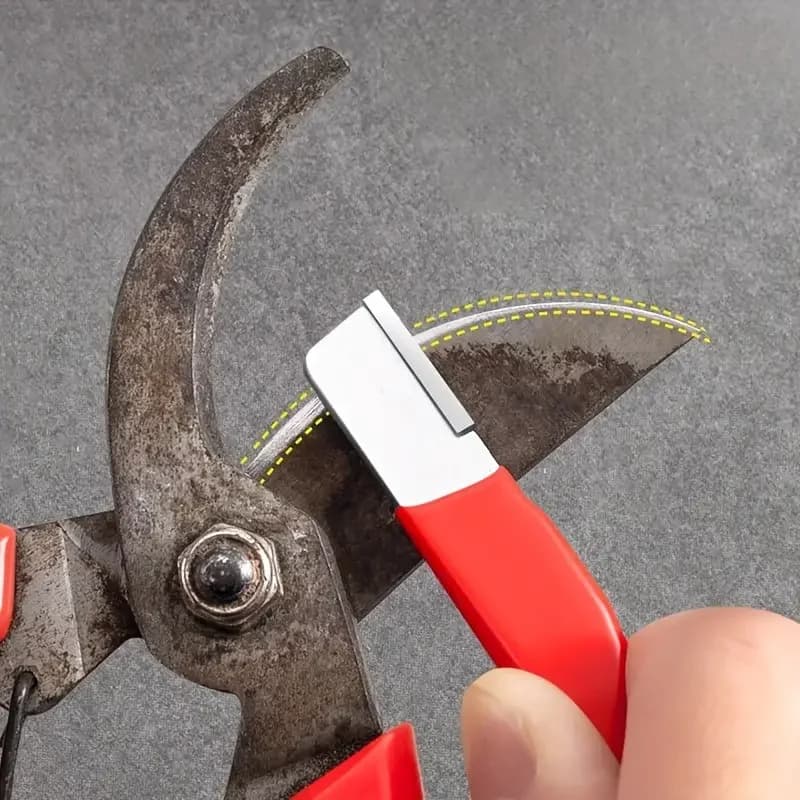
The sharpener at £10.99 also handles garden scissors, which is a bonus that extends its usefulness beyond the kitchen. Dull kitchen scissors are a universal frustration, and being able to bring them back to working condition with the same tool that handles your knives means you actually use it rather than leaving it in a drawer. The versatility makes it a more practical investment than a single purpose tool.
What to look for before you buy a knife sharpener
The most important thing to check is blade compatibility. Not all sharpeners work on all knives. This sharpener is designed for standard steel kitchen knives, which covers the vast majority of home kitchens. If you own ceramic knives or serrated blades, you need a different approach, as the tungsten slots can damage those edges. For standard chef knives, paring knives, and utility blades, this is exactly the right tool.
Stability during use is the other critical factor. A sharpener that slides around the worktop while you pull a blade through is frustrating and potentially unsafe. This sharpener has a non slip base that grips the surface, which means you can use it one handed with confidence. The grip matters more than you might think, because sharpening requires smooth, consistent pulls.
Price is where this sharpener distinguishes itself. Professional sharpening services charge £5 to £10 per knife, which means this tool pays for itself after sharpening two knives. If you cook regularly, you will sharpen your knives many times across a year. At £10.99, the cost per use is negligible, which is the hallmark of a genuinely useful kitchen gadget rather than a novelty.
Real world use and honest limitations
In everyday use, the sharpener takes about ten seconds per knife. You pull the blade through the tungsten slot three or four times, then through the ceramic slot the same number, and the edge is restored. The process is quick enough to do before you start cooking, which is when most people realise their knife is dull. This immediacy is what makes a pull through sharpener more practical than a whetstone for daily cooking.
The honest limitation of a fixed angle sharpener is that it cannot match the precision of a skilled hand on a whetstone. If you own expensive Japanese knives and value a specific edge geometry, you may want a more refined approach. For the knives most people actually own, standard stainless steel blades from a high street shop, this sharpener produces a better edge than they had when new.
The other limitation is metal removal. The tungsten stage removes a small amount of metal each time, which means your blades will eventually need replacement after years of sharpening. This is true of all sharpening methods. The key is to use the ceramic stage more frequently for maintenance and reserve the tungsten stage for when a blade is genuinely dull, which extends the life of your knives.
What real buyers are saying
Buyers consistently report being surprised by how well this sharpener restores dull knives. Multiple reviewers mention bringing back knives they had given up on, describing the results as good as new after a few pulls through the slots. The ease of use is the most frequently mentioned positive, with buyers appreciating that no skill or technique is required.
The two stage system draws favourable comments, with several buyers noting the difference between the tungsten reshaping and the ceramic finishing. Reviewers who cook regularly mention keeping the sharpener near the cutting board and giving their knives a quick pass through the ceramic stage before each session, which maintains the edge without removing excess metal.
The honest caveat from buyers is that the sharpener works best on standard kitchen knives and is less effective on very hard or specialised blades. A few reviewers note that it is not a replacement for professional sharpening of high end knives, which is fair. For the price and the intended use, the consensus is that it does the job reliably. When multiple buyers independently mention the same thing, it is not marketing.
Featured in this article
Frequently asked questions
Does this knife sharpener work on all types of kitchen knives?
It works on standard steel kitchen knives including chef knives, paring knives, and utility blades. It is not suitable for ceramic knives or serrated blades, as the tungsten slots can damage those edges. For the majority of home kitchens, it covers every knife you own.
How often should I use the tungsten versus ceramic stages?
Use the ceramic stage frequently for maintenance, giving your knife a few passes before each cooking session. Reserve the tungsten stage for when a blade is genuinely dull and needs reshaping, which extends the life of your knives by removing less metal over time.
Is a pull through sharpener better than a whetstone?
A whetstone gives more precise control over the edge angle and is preferred by experienced cooks with high end knives. A pull through sharpener is faster, requires no skill, and produces a working edge that is more than sufficient for most home cooking. For daily kitchen use, the convenience wins.