





Kitchen Knife Sharpener UK: Keep Your Blades Razor-Sharp at Home
A sharp knife is a safe knife. Here's why a simple household knife sharpener is the most underrated kitchen tool you'll buy this year.
SHOPTHIVA Editors
Why your kitchen knives are probably dull
If you can't remember the last time you sharpened your kitchen knives, they're dull. Most home cooks use the same knives for months or years without touching them up, and then wonder why tomatoes squash instead of slice and onions make them cry more than they should.
A dull knife is genuinely more dangerous than a sharp one. It requires more pressure to cut, which means less control. When it slips, and it will, it goes with force behind it. Professional chefs know this: the safest knife is the one that cuts exactly where you intend it to.
The solution doesn't require expensive sharpening stones or professional services. A simple multi-segment kitchen knife sharpener at home keeps your blades in working condition with about thirty seconds of effort every few weeks.
How a 4-segment sharpener works
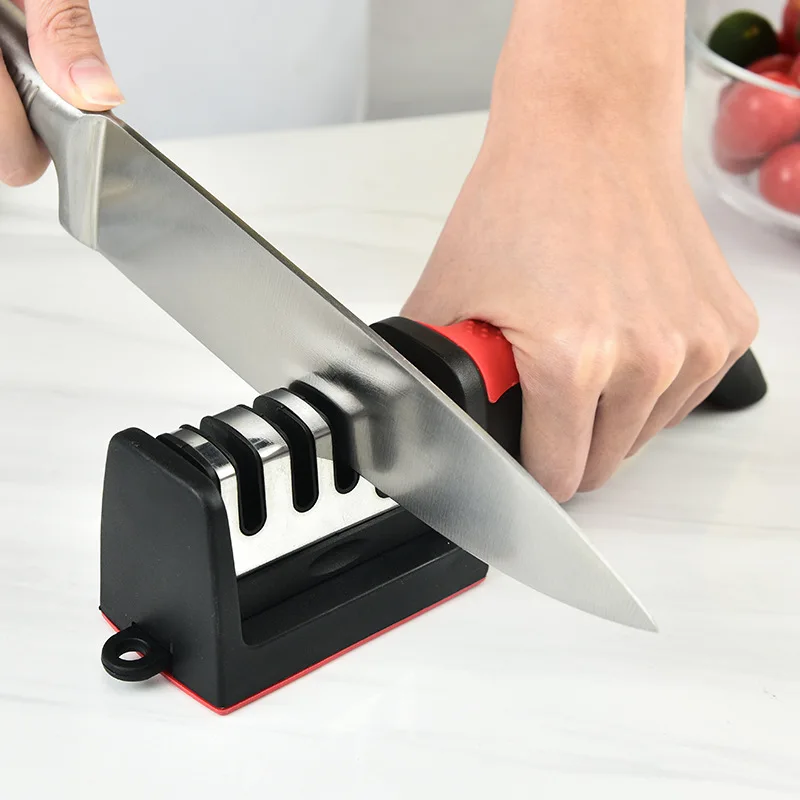
A 4-segment knife sharpener offers four different sharpening stages in one compact tool. Typically, this includes a coarse slot for badly dulled blades, a fine slot for regular maintenance, a honing slot to realign the edge, and sometimes a specialised slot for scissors.
The design is straightforward: you pull the knife through each slot a few times, and the preset angle guides ensure you're sharpening at the correct angle without guesswork. This is important because freehand sharpening with a stone requires skill and practice, most home cooks get the angle wrong and end up making the blade worse.
The preset angle is the real value here. Professional sharpening creates a consistent edge at a specific angle, usually 15 to 20 degrees. A pull-through sharpener with fixed guides replicates this consistency without requiring any technique.
A practical, affordable option
The Kitchen 4-Segment Knife Sharpener on SHOPTHIVA covers all the essentials at £16.99. It includes multiple sharpening stages for different levels of blade wear, and the compact design means it lives in a kitchen drawer without taking up space.
At this price point, it's not a professional-grade whetstone system, and it doesn't pretend to be. What it does is keep everyday kitchen knives functional. If you're cooking daily with standard stainless steel knives, this is the maintenance tool you need.
Think of it like checking your car's tyre pressure. You don't need a professional mechanic every time, you need a simple tool you can use yourself, regularly, that keeps things safe and functional. That's exactly what this is for your kitchen knives.
When to sharpen and when to stop
Sharpen your knives when they stop cutting cleanly. If a tomato skins squashes under your knife instead of slicing through, it's time. If you're sawing back and forth on an onion instead of pressing through, it's time. A sharp knife should cut with minimal pressure.
Don't over-sharpen. Running a knife through a sharpener too frequently removes more metal than necessary, shortening the blade's life. For most home cooks, a quick touch-up every two to three weeks is plenty. If you cook heavily every day, weekly is reasonable.
Honing and sharpening are different things. Honing realigns the existing edge, it's what you should do every time you cook. Sharpening removes metal to create a new edge, this is what the sharpener does less frequently. A 4-segment sharpener typically handles both.
What a knife sharpener won't fix
A pull-through sharpener can't fix a chipped or severely damaged blade. If your knife has a visible chip in the edge, it needs professional grinding, not a home sharpener. The sharpener is for maintenance, not repair.
It also won't work on serrated knives the way it works on flat-edge blades. Serrated knives have scalloped edges that need a specialised cylindrical sharpener, not a standard V-slot. Most 4-segment sharpeners include a specific slot for scissors, but check before assuming it works on serrated blades.
Finally, very high-end Japanese knives with hardened steel may need a whetstone rather than a pull-through. But for 90% of home cooking with standard kitchen knives, a multi-segment sharpener is more than adequate.
Featured in this article
Frequently asked questions
How often should I sharpen my kitchen knives at home?
For most home cooks, a quick sharpening session every two to three weeks keeps blades in good condition. If you cook every day, weekly touch-ups are reasonable. The key sign it's time is when the knife squashes tomatoes instead of slicing through them cleanly.
Will a pull-through sharpener damage my expensive knives?
For standard stainless steel kitchen knives, a pull-through sharpener with preset angle guides is safe and effective. For very high-end Japanese knives with hardened steel, a whetstone is preferable. The preset angle actually prevents the most common damage, incorrect freehand sharpening angles.
What's the difference between honing and sharpening?
Honing realigns the existing edge without removing metal, it should be done every time you cook. Sharpening removes a small amount of metal to create a fresh edge, this is done less frequently, every few weeks. A 4-segment sharpener typically handles both functions.