

How to Layer Necklaces Without Them Tangling
Layered necklaces look effortless in photos and turn into a knotted mess by lunchtime. We break down the three rules that keep chains, chokers and pendants sitting separately on your neck all day, plus the exact pieces that make it easy.
SHOPTHIVA Editors
Why Layered Necklaces Tangle (and Why Most Advice Misses the Point)
The single biggest reason layered necklaces tangle is not chain quality or clasp type. It is length differential. When two chains sit within a centimetre of each other, they occupy the same movement zone and twist around each other with every turn of your head. The fix is not better chains -- it is a gap of at least 5 cm between each layer.
Most styling guides tell you to mix chain weights or use a necklace separator clip. Those help, but they are secondary. Get the lengths right first and most tangling disappears on its own. A choker at 35 cm, a pendant at 45 cm, and a long chain at 60 cm will rarely cross paths, no matter how much you move.
The other overlooked factor is clasp position. Heavy pendants pull the clasp to the front over the course of a day, which shortens one side and creates asymmetry that invites tangling. Lighter pendants and centre-weighted chains avoid this.
It is worth noting that climate plays a role most guides ignore. In humid summer weather, skin produces more oils that act as a lubricant, making chains more prone to sliding and twisting. A quick wipe of your neck with a tissue before putting on layered necklaces removes that film and dramatically reduces midday tangling. It takes five seconds and is the kind of small habit that separates people whose jewellery survives the day from those who spend lunchtime untangling knots.
The Three-Length Rule That Actually Works
If you only remember one thing from this guide, make it this: choose three distinct lengths and stick to them. A collar or choker (30-38 cm), a mid-length pendant (42-50 cm), and a long layer (55 cm and beyond). This creates visible separation on the chest and gives each chain its own air space.
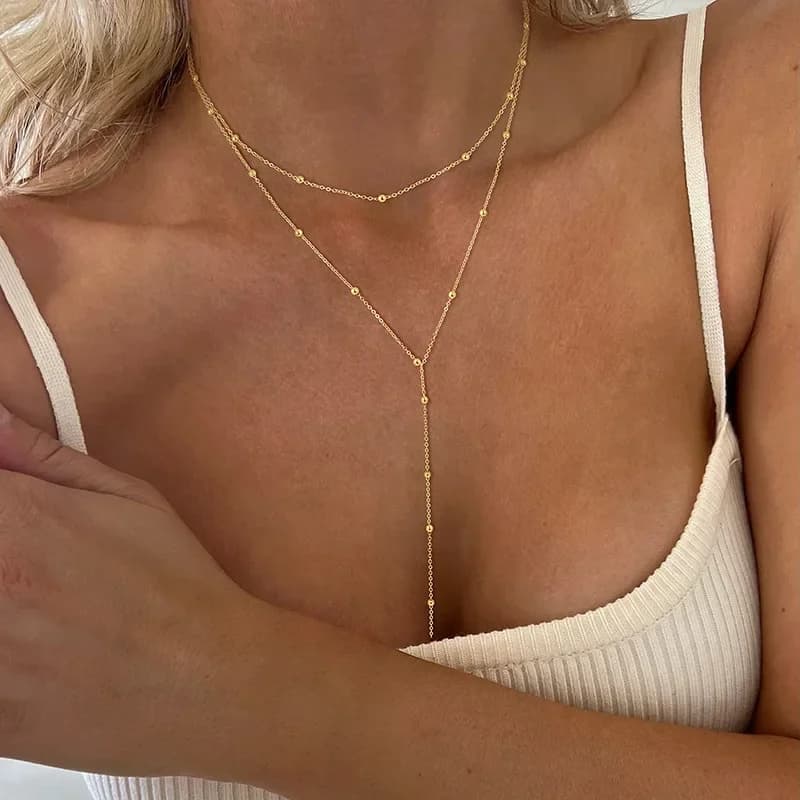
Start with a pre-layered piece if you are new to stacking. The LATS Gold Color Double Layered Long Tassel Chain Necklace does the work for you -- two chains fixed at different lengths on a single clasp, so they cannot migrate together. At £12.99 it is the cheapest way to get the layered look without the daily untangling ritual.
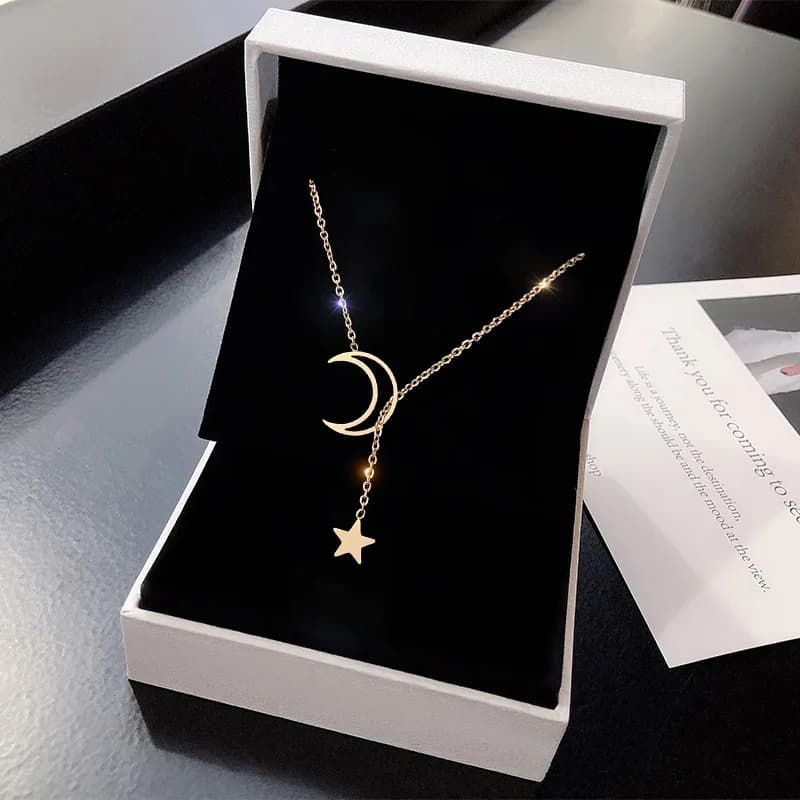
If you prefer to build your own stack, add a Simple Moon Star Pendant Choker at £12.99 as your base layer, then hang a longer chain beneath it. The moon-and-star pendant sits flat against the collarbone and gives the shorter layer a focal point so it does not visually merge with the longer chain.
A common mistake is layering two chains with identical pendant styles. Two small pendants at different lengths can look intentional, but two large statement pieces compete for attention and create visual clutter. The rule of thumb is one focal pendant per stack -- let the other layers be plain chains or very small accents. This keeps the eye moving naturally from choker to pendant to long chain rather than getting stuck on two competing elements.
Chain Type Matters More Than You Think
Smooth, round-link chains slide past each other. Textured chains -- rope, curb, Figaro -- grip and catch. If you are layering three pieces, make at least two of them smooth-link or cable chain. Save the chunky curb chain for a standalone look.
Tassel chains, like the ones on the LATS double-layered piece, are surprisingly tangle-resistant because the tassel drops straight down and has nothing to wrap around. Pendant chains with a single fixed bead or charm are similarly safe -- the pendant anchors the chain in one position.
Avoid layering two pendant necklaces of similar length. Two pendants at 45 cm will swing into each other constantly and the chains will twist within an hour. If you want two pendants, separate them by at least 10 cm.
If you are buying a pre-layered piece like the LATS double chain, inspect where the two chains join the clasp. A single clasp holding both chains is more tangle-resistant than two separate clasps, because the fixed attachment point prevents the chains from rotating independently. This is a design detail that does not show up in product photos but makes a real difference in daily wear.
Extension Chains: The £20 Secret Weapon
The reason most people fail at layering is that their jewellery box does not have the right lengths. You own a 45 cm chain and a 50 cm chain, and that 5 cm gap is not enough. Extension chains fix this for less than the cost of a new necklace.
A pack of 10 stainless steel extension chains with lobster clasps at £20.99 gives you adjustable length on every necklace you own. Clip one between the clasp and the jump ring of any chain and you can dial in a 55, 60, or 70 cm layer in seconds. Stainless steel also means no green neck marks at the end of the day.
This is the highest-leverage purchase in this guide. Before buying a new layered set, try adding extension chains to chains you already own. You will often find you can build a three-layer stack from your existing jewellery box.
One thing to avoid: do not use extension chains made of a different metal than your main necklace. A silver extension on a gold chain creates a visible colour break at the back of your neck that shows up whenever your hair moves. Stick to matching metals, or use a clear plastic cord extender if you need a quick length adjustment without buying a full set of metal chains.
Putting It Together: A £30 Three-Layer Stack
Here is a complete layered necklace stack that costs under £32 and will not tangle: the LATS double-layered tassel chain (£10.99) as your mid and long layers, the Moon Star pendant choker (£10.99) as your collar layer, and a pack of extension chains (£20.99) to fine-tune the gap between layers.
Put the choker on first, sitting snug at the base of your neck. Add the double-layered piece next, letting the tassel drop below the collarbone. If the shorter of the two tassel chains sits too close to the choker, add a 5 cm extension to push it down.
The result is three visible layers at three distinct lengths, each with its own focal point, none of them close enough to twist together. Wear it for a full workday and you will take it off in the same configuration you put it on.
Featured in this article
Frequently asked questions
How many necklaces should I layer together?
Three is the sweet spot. Two looks intentional but sparse, four starts to look cluttered and increases tangling risk. Three layers at three distinct lengths (choker, mid, long) gives the layered look without visual overload.
Will gold-plated alloy jewellery turn my neck green?
Cheap alloy chains can leave a green mark, especially in hot weather or if you sweat. Stainless steel and stainless steel-plated pieces avoid this. If you are buying alloy, look for pieces described as gold-plated rather than gold-coloured, and keep them dry.
Do necklace separator clips actually work?
They help, but they are a workaround for bad length choices. A separator clip holds two clasps together at the back of your neck, which stops the chains crossing at the clasp. If your lengths are properly spaced (5 cm or more apart), you will not need one.
Can I layer necklaces of different metals?
Yes, and mixed-metal layering is currently on trend. Gold, silver and rose gold can sit together as long as the length rule is followed. The risk is colour clash at the same length, so keep different metals at different layers.
How do I stop pendant necklaces from flipping over?
Pendants flip because the chain is too heavy for the pendant or the pendant is not centre-weighted. Use a finer chain for small pendants, and check that the jump ring is closed tightly so the pendant cannot slide around it.
Product gallery
Further reading