



Weather Cardiff Rain Coat UK: What Actually Keeps You Dry in a Welsh Downpour
Cardiff weather means rain on roughly half the days of the year. Here's what to look for in a rain coat and a waterproof hiking jacket that actually keep you dry in the UK.
SHOPTHIVA Editors
Why Cardiff Weather Needs a Proper Rain Coat
Cardiff gets rain on roughly 150 days a year, and the rain here is rarely the polite kind. It arrives sideways off the Bristol Channel, turns to drizzle for an hour, then dumps again while you are halfway through a walk in Bute Park. A coat that shrugs off a light shower in London will soak through in twenty minutes in Cardiff. The city demands something properly impermeable.
The difference between a shower-resistant jacket and a true rain coat is the seam treatment and the hood. A shower-resistant shell has water-repellent fabric but raw seams, so water wicks through the stitching in sustained rain. A proper rain coat has sealed or taped seams and a hood that actually covers your hair and glasses. In a city where the forecast can flip between sun and downpour inside an hour, that distinction is the difference between a good day out and a miserable one.
A good Cardiff rain coat also needs to be easy to carry when it is not raining. The city centre is compact and walkable, which means you are in and out of shops, arcades, and the castle grounds all day. A coat that stuffs into its own pocket or rolls into a bag is far more useful than a stiff waxed jacket that you have to lug around dry.
The Hooded Rain Coat: City-Ready and Unisex
The 1pc Hooded Rain Coat Women Men Impermeable Thickened at £17.99 is the kind of coat that lives in your bag from October to April. It is impermeable rather than merely shower-proof, which means the rain beads off the surface rather than soaking in, and the thickened fabric holds its shape in wind instead of flapping against you.
The hood is the key feature for Cardiff. A good hood has a stiffened peak so the rain does not sheet into your eyes, and it is deep enough to cover your hair without flattening it. Because this coat is unisex, the cut is roomy enough to layer a jumper underneath on the cold, wet days that Cardiff specialises in from November through to March.
At this price, the coat is disposable enough that you will not mind it getting muddy on a walk along the Taff Trail or crumpled at the bottom of a rucksack. That is the right attitude for a city rain coat: it is a tool, not a wardrobe piece. You buy it to be caught in the rain with, not to pose in. If it lasts two winters of daily use, it has paid for itself many times over.
When the City Coat Is Not Enough: The Hiking Jacket
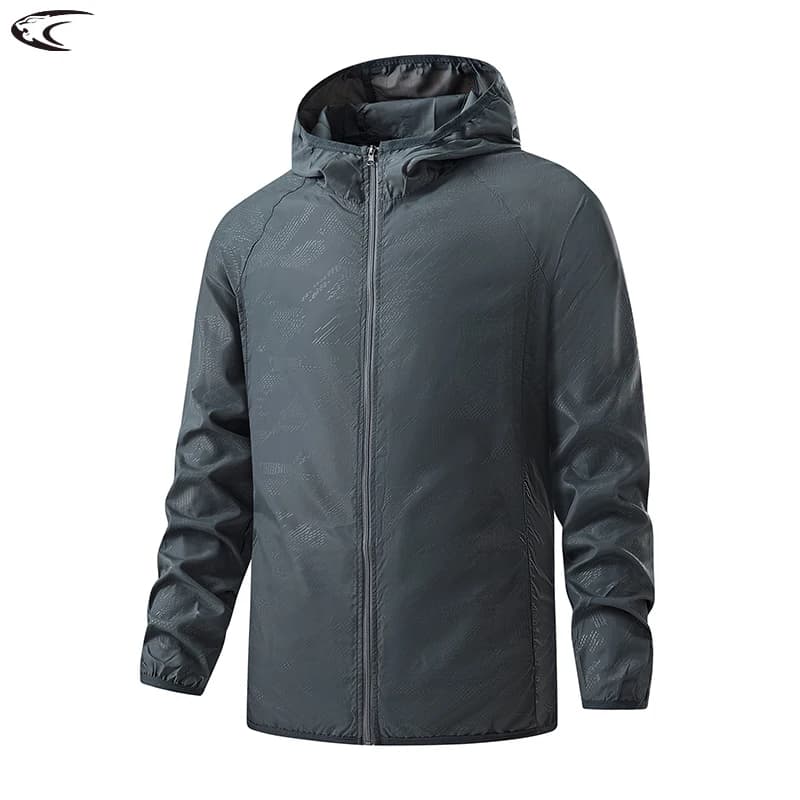
A city rain coat is fine for pavements, but if you are heading up to the Brecon Beacons or the Vale of Glamorgan coast, you need something with more structure. A waterproof hiking jacket has a longer back, a higher collar, and pit zips or ventilation that stops you steaming from the inside when you are climbing. It also tends to have a proper storm flap over the main zip, which matters when the wind is doing sixty miles an hour on a ridgeline.
The Waterproof Hiking Jackets for Men and Women Sun Protection at £19.99 does the job. It is cut for movement, so the shoulders do not pull when you reach for a style or a gate, and the fabric is rated for sun protection as well as rain, which is genuinely useful on a Welsh hill where the weather can swing from downpour to bright glare in the same afternoon.
The thing to check on any hiking jacket is the cuff. A velcro-adjustable cuff lets you seal the sleeve against rain running down your arm, and it is the single feature that separates a proper hill jacket from a fashion shell. If the cuffs are loose elastic only, you will get wet forearms no matter how waterproof the body of the jacket is.
Layering for Welsh Weather: The System That Works
No single coat handles every Cardiff day. The approach that works is a layering system: a base layer that wicks, a mid layer that insulates, and an outer shell that sheds water. On a dry-cold morning you wear all three. On a wet-warm afternoon you drop the mid layer and wear just the shell over a t-shirt. The shell is the piece you carry every day; the mid layer is the one you add or remove.
For the city, the hooded rain coat is the shell. It is short enough to sit comfortably when you are on a bus or in a cafe, and it does not have the long tail of a hiking jacket that gets muddy on pavements. For the hills, the hiking jacket is the shell, and you add a fleece or a light jumper underneath it depending on the wind.
The mistake to avoid is buying one heavy coat and trying to make it do everything. A heavy coat is too hot for a wet September day in the city and not waterproof enough for a January walk on the coast. Two lighter shells at under £20 each give you more usable combinations than one £60 coat, and you can leave one in the car or the office so you are never caught out.
Caring for a Rain Coat So It Stays Waterproof
The most common reason a rain coat stops working is not fabric failure, it is dirt. Grime from city air and sweat from the inside both mask the water-repellent treatment, so rain starts to soak in rather than bead off. Washing the coat according to its label, usually a cool wash with no fabric softener, restores the surface. Fabric softener is the enemy of water repellency, so skip it entirely.
After washing, a warm tumble cycle or a careful iron on a low setting can reactivate the durable water-repellent coating on many rain coats. Check the label first, because some coatings should not be ironed. If the coating is genuinely worn out, a reproofing spray applied to a clean, damp coat is a cheap way to add another season of use.
Storage matters too. Do not stuff a wet coat into a cupboard and leave it, because mould and the damp smell that follows are very hard to remove. Hang it to dry fully before packing it away, and store it hanging rather than crumpled if you have the space. A coat that is looked after will last several Cardiff winters; one that is abused will leak by Christmas.
Featured in this article

Frequently asked questions
How wet does Cardiff actually get?
Cardiff receives rain on roughly 150 days a year, with the wettest months from October to January. The rain often comes as driven showers off the Bristol Channel rather than steady drizzle, so a coat needs sealed seams and a proper hood, not just shower-resistant fabric. A city rain coat handles most days; a hiking jacket is better for the hills and coast.
What is the difference between a rain coat and a waterproof hiking jacket?
A rain coat is shorter, lighter, and built for urban use where you are in and out of shops and cafes. A waterproof hiking jacket is longer, has ventilation zips, adjustable cuffs, and a storm flap over the main zip, and is cut for movement on rough ground. For Cardiff city centre a rain coat is enough; for the Brecon Beacons you want the hiking jacket.
How do I stop my rain coat leaking at the seams?
Check that the coat has sealed or taped seams when you buy it, because raw stitching wicks water through in sustained rain. If an older coat starts to soak through, wash it without fabric softener to remove grime, then reproof it with a spray treatment. Store it dry and hanging rather than crumpled, and it should stay waterproof for several winters.