
Women's Yoga Tops Under £25: What Fabric Actually Wicks Sweat?
Every activewear brand claims their tops wick sweat, but at the £25 price point the fabric story is more complicated than the label suggests. We break down which materials actually breathe, which ones turn into a soggy mess, and the £21 tops that genuinely perform.
SHOPTHIVA Editors
Why 'Moisture-Wicking' on a Label Means Almost Nothing
Every activewear garment at every price point claims to be moisture-wicking. The phrase has been diluted to the point of meaninglessness. What actually matters is the fibre content and fabric construction, not the marketing copy.
True moisture wicking requires a hydrophobic fibre that pulls sweat away from the skin and spreads it across the fabric surface where it can evaporate. Polyester and nylon do this naturally. Cotton absorbs sweat and holds it, which feels wet but not wicking. Blends sit in between, and the ratio determines performance.
At the £25 price point, most 'yoga tops' are polyester-spandex blends with varying knit densities. The difference between one that wicks and one that clings is not the fibre -- it is how tightly the fabric is knit. A loose knit breathes; a tight knit traps. You cannot tell this from a product photo, which is why understanding fabric matters before you buy.
One thing the label will not tell you is the fabric weight, and weight matters as much as fibre content. A lightweight polyester-spandex knit (around 150 gsm) is ideal for hot yoga and summer -- it breathes and dries fast. A heavier knit (200+ gsm) is better for outdoor winter running because it traps a thin layer of warm air. Both are the same fibre blend on the label, but they perform completely differently. If you cannot feel the fabric before buying, look for the weight in the product description or choose based on the stated season.
The Fabrics That Actually Work for Hot Yoga
Polyester-spandex (82/18 or similar): The standard activewear blend. Wicks well, dries fast, and holds its shape through repeated washing. This is what the Outdoor Sports Long Sleeved Women Slim Yoga Clothes at £21.49 use. It is the reliable choice for yoga, running, and gym work.
Nylon-spandex: Softer and stretchier than polyester, with a silkier hand feel. Wicks marginally better and dries slightly slower. Usually found in higher-end activewear but occasionally appears at this price. If you see nylon-spandex in a £21 top, it is a pleasant surprise.
Cotton-poly blend: Comfortable and soft but holds moisture. Fine for low-intensity yoga or a gentle stretch class. A bad choice for hot yoga, HIIT, or anything that makes you sweat heavily -- the cotton component absorbs sweat and the top stays wet for the rest of the session.
Seam construction is the other hidden quality marker. Flatlock seams -- where the fabric edges are overlapped and stitched flat -- do not chafe during repetitive movement like vinyasa flows. Overlock seams, which are the cheaper default, create a raised ridge that can rub during a long session. At the £21 price point, flatlock is a sign that the manufacturer has thought about the garment as activewear rather than as a fashion item with stretch fabric.
Long Sleeve vs Jacket: What Suits Your Practice
A long-sleeved yoga top is for the practice itself -- it stays put through inversions, does not gap at the front during forward folds, and gives you sun coverage for outdoor sessions. The slim-fit long-sleeved top at £21.49 is designed for this: close to the body, stretchy enough for full range of motion, and breathable enough to not overheat.
A fitness jacket is for the warm-up and cool-down, or for layering over a tank top on the way to the studio. The Quick Dry Stand Up Collar Fitness Jacket at £21.49 has a stand-up collar that keeps wind off your neck on the walk to class and a front zip that lets you dump heat quickly once you warm up.
Most people need both, but if you are choosing one, the long-sleeved top is the more versatile single garment. It works for yoga, pilates, running, and as a base layer under a winter coat. The jacket is a better second purchase once you have the base layer sorted.
The stand-up collar on the fitness jacket is not just a style choice. In outdoor yoga or running, a collar that sits against the back of the neck keeps wind off an area that is particularly sensitive to cooling. When the neck cools, the body redirects blood flow from extremities to the core, which is why cold-weather exercise often leaves your hands and feet cold first. A collar that breaks the wind at the neck is a small detail with an outsized effect on overall comfort.
The Bottom Half: Don't Neglect Your Shorts
The mistake most people make when buying yoga wear is spending the budget on the top and grabbing whatever old shorts they own for the bottom. Yoga shorts need the same fabric qualities as the top -- wicking, stretch, and a waistband that does not roll down during inversions.
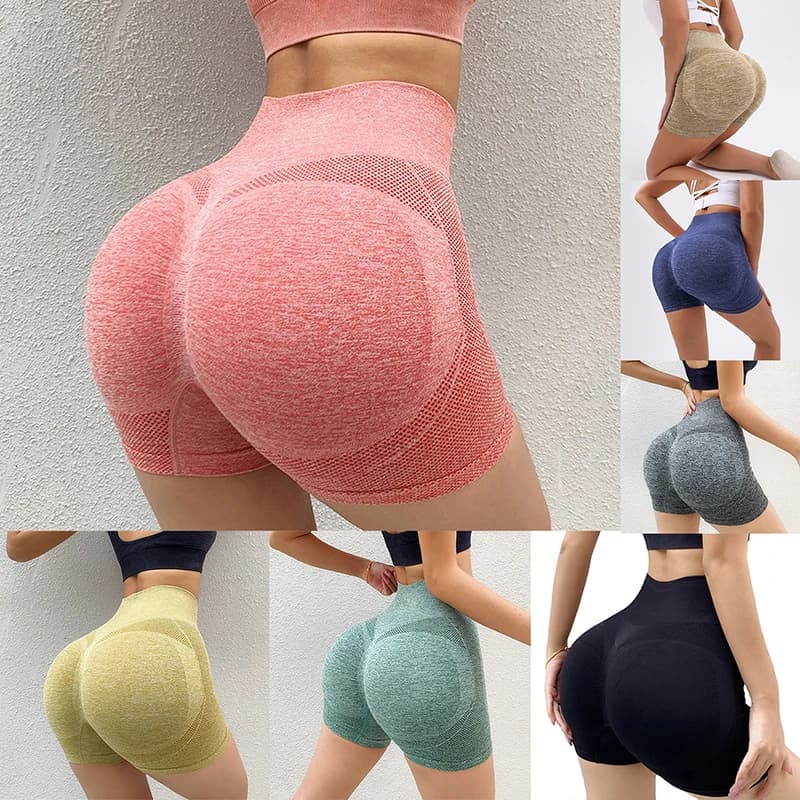
The Women Summer Shorts for Sports Fitness Gym at £21.49 are a polyester-spandex blend with a high waistband that stays put through downward dog and squats. The short cut is right for hot yoga and summer gym sessions; if you run cold or do floor work that is hard on the knees, pair them with leggings instead.
A complete yoga outfit for under £43 -- the long-sleeved top and the shorts -- is achievable at this price point without compromising on fabric performance. That is the advantage of buying from the same activewear range: the fabric qualities are consistent across pieces.
Caring for Activewear So It Keeps Wicking
Activewear loses its wicking performance when fabric softener coats the fibres and when high heat melts the spandex. Never use fabric softener on activewear. Wash on cold with regular detergent, and hang to dry rather than tumble drying.
The spandex (elastane) in these tops degrades at temperatures above 40 degrees. A hot wash once will not destroy the fabric, but repeated hot washing shortens the life of the stretch significantly. After 6-12 months of hot washing, a top that once held its shape will start to sag at the elbows and waist.
If your yoga top has developed a persistent smell despite washing, it is likely build-up from fabric softener or sweat oils. Run it through a cold wash with a half-cup of white vinegar and no detergent to strip the build-up, then wash normally. This restores wicking performance in most cases.
Featured in this article
Frequently asked questions
Does polyester-spandex actually wick sweat or just claim to?
Polyester is naturally hydrophobic, meaning it pulls moisture away from the skin and spreads it across the fabric surface for evaporation. Spandex adds stretch. A polyester-spandex blend in a loose-enough knit genuinely wicks -- the performance issues at this price come from tight knits that trap air, not from the fibre itself.
Can I wear these yoga tops for running and HIIT too?
Yes. The long-sleeved slim top and the fitness jacket are both designed for general sportswear, not just yoga. They wick and breathe well enough for running and HIIT, though for very high-intensity sessions you may prefer a tank top for maximum ventilation.
Should I size up in activewear for a looser fit?
No. Activewear is designed to fit close to the skin for moisture wicking to work -- fabric needs to be in contact with the skin to pull sweat away. Sizing up creates air gaps that break the wicking capillary action. If you want a looser fit for comfort, choose a relaxed-fit design rather than sizing up a compression-fit top.
How do I stop my yoga tops from smelling even after washing?
The smell is usually build-up from fabric softener or sweat oils. Wash activewear without fabric softener on a cold cycle. If the smell persists, run a cold wash with half a cup of white vinegar and no detergent to strip the build-up, then wash normally with detergent.
What is the difference between a yoga top and a fitness jacket?
A yoga top is a base layer worn during practice -- close-fitting, stretchy, and designed to stay put through movement. A fitness jacket is a layering piece for warm-up, cool-down, or the walk to the studio -- it has a zip for heat management and a collar for wind protection. Most people need both eventually.
Product gallery
Further reading