
Are Carbon-Plate Running Shoes Worth It Under £50?
The carbon plate went from race-day secret to high-street staple. Here's what it actually does for your run - and when a well-cushioned everyday trainer is the smarter buy.
SHOPTHIVA Editors
Quick takeaways
Carbon plates reduce energy loss by resisting toe bend, giving a smoother roll-through on each stride. The effect is real but modest - you'll feel it most at faster paces. You don't need to spend £200 to get the benefit. A carbon board paired with responsive air-cushion foam delivers a similar sensation at a fraction of the price. Fit and cushioning still matter more than the plate itself - a shoe that fits well and matches your distance will always beat a poorly-fitted premium plated shoe.
What the carbon plate actually does
A carbon plate is a thin, stiff layer set inside the midsole foam. On each stride it resists bending at the toe, which returns a little of the energy you put in and encourages a smoother roll-through. Paired with responsive foam, it can improve your running economy - the energy you burn to hold a given pace - so a fast effort feels less like hard work.
It is not a cheat code. The plate helps most when you are already running at a decent clip and landing consistently. On slow, easy miles the benefit is smaller - worth remembering before you decide how much to spend. Think of it as a tailwind, not an engine upgrade.
Who really benefits
If you race 5K to half-marathon, do tempo sessions, or simply enjoy the pop of a plated shoe, you'll feel the difference. The combination of a carbon board and tall air-cushion foam suits runners who want one shoe that can handle both a quick session and a long weekend effort.
If you mostly jog easy miles or are new to running, prioritise fit and cushioning first. A plate is a nice-to-have, not the thing that keeps you injury-free. That said, if the price gap is small - under £50 vs £200+ for a premium brand - there's no reason not to try it and see how it feels.
Fit and cushioning still come first
Leave a thumb's width at the toe - feet swell as you run. The heel should lock in with no slip, and the upper should breathe so your foot stays cool over distance. A wide toe box lets your toes splay naturally, which reduces blister risk and improves stability on uneven surfaces.
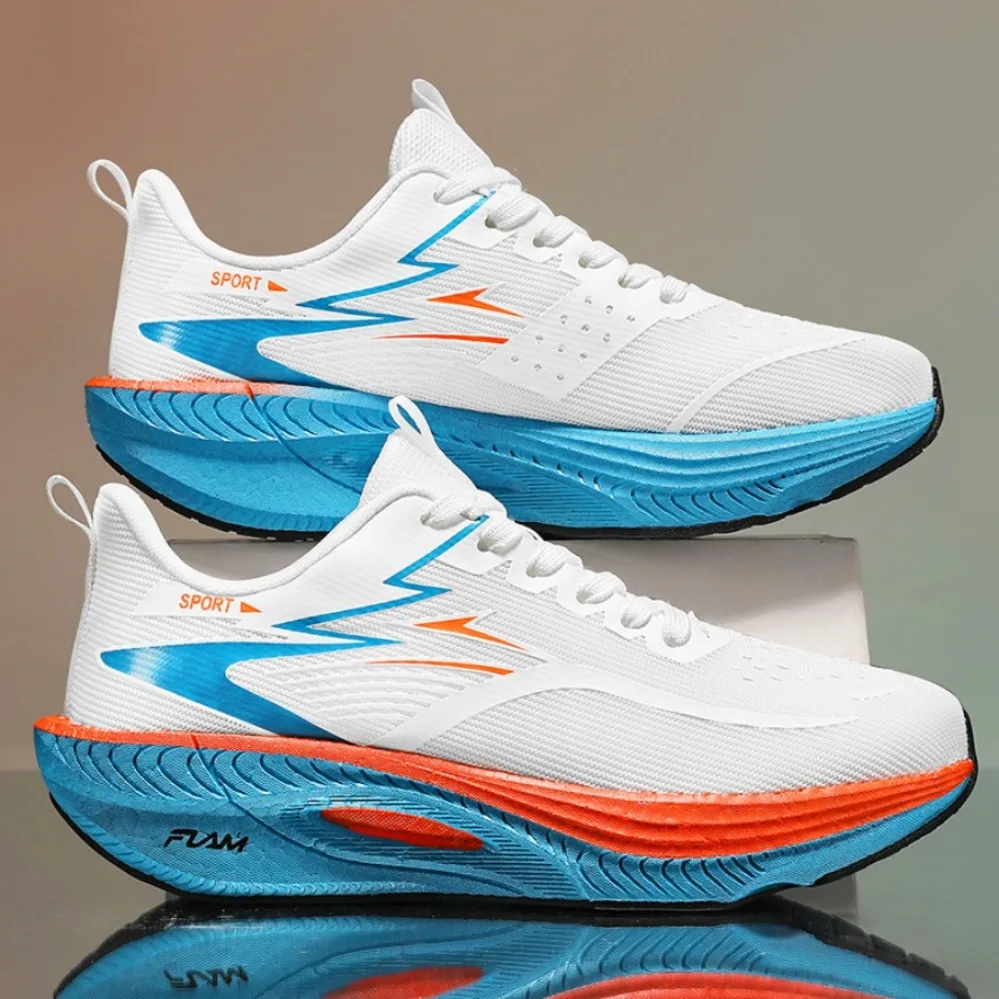
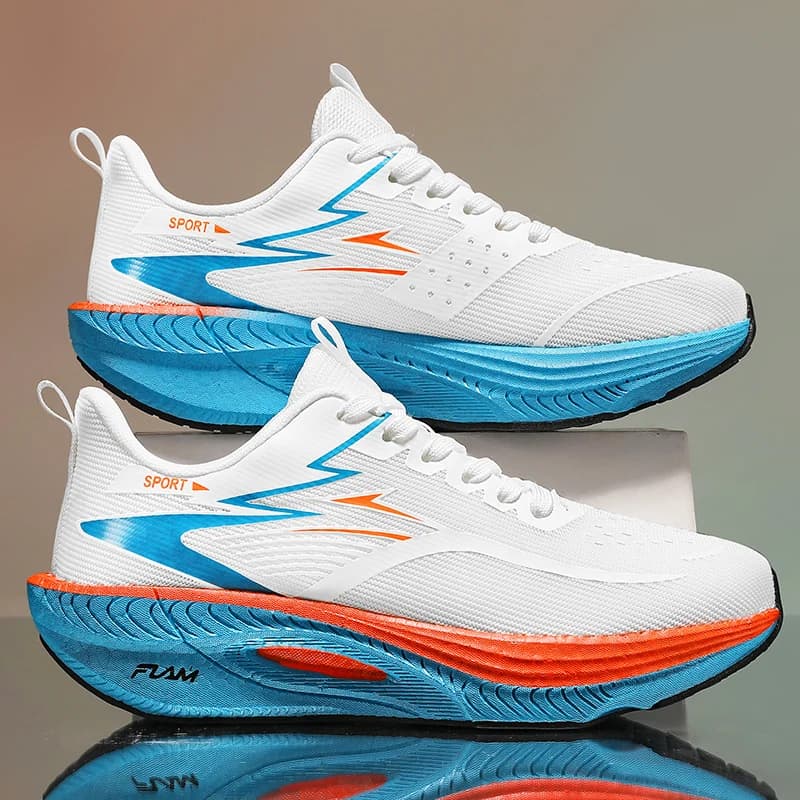
Match cushioning to your distance: firmer and lower for short and fast, taller and softer for long and easy. A balanced daily trainer with a breathable mesh upper covers the widest range if you only own one pair - the Marathon Carbon Air-Cushion trainer is built around exactly that brief, and at £30.99 it costs less than a month's gym membership.
Carbon board vs full carbon plate: what's the difference?
A full carbon plate runs the entire length of the midsole and is typically found in £180-£250 race shoes. A carbon board - like the one in the Marathon trainer - is a shorter, shaped insert that provides stiffness at the forefoot without the cost of a full plate. For most recreational runners, the practical difference is negligible. Both reduce toe flex and improve energy return.
The real question is whether the foam around the plate is good enough to matter. A stiff plate sitting on cheap foam feels dead underfoot. The Marathon trainer pairs its carbon board with a tall air-cushion unit, which gives the plate something responsive to work against. That combination - not the plate alone - is what makes a plated shoe feel 'bouncy'.
How the Marathon Carbon trainer holds up in practice
We've been recommending the Marathon Carbon Air-Cushion Running Shoes (£30.99) as a budget-friendly entry into plated shoes. The carbon board sits between layers of EVA foam with a visible air-cushion unit in the heel. At around 240g per shoe (size 9), it's light enough for tempo work without feeling flimsy on long runs.
The mesh upper is breathable and the outsole has enough rubber coverage for 300-400 miles of road running. If you're curious about carbon plates but can't justify a Nike AlphaFly's £275 price tag, this is the shoe that lets you test the sensation for less than the cost of two parkrun coffees. Browse more options in our running shoes collection.
Featured in this article
Frequently asked questions
Do carbon-plate shoes make you faster?
They can make fast efforts feel smoother and return a little energy, but they won't replace training. Studies show a 1-4% improvement in running economy, which translates to modest time gains - biggest at quicker paces.
Are cheaper carbon-plate shoes any good?
The plate itself is inexpensive to make; what varies is the foam and build quality. A well-cushioned, breathable trainer at £35 with a carbon board delivers a genuine plated-shoe sensation. Save the premium race shoes for race day if you want them.
How long do carbon-plate running shoes last?
Expect 300-500 miles from a daily trainer with a carbon board, similar to non-plated shoes. The plate doesn't wear out - the foam does. Replace when the cushioning feels flat or the outsole rubber is worn through.
Can beginners use carbon-plate shoes?
Yes. There's no skill requirement. The plate simply adds stiffness at the toe. Beginners benefit from the smoother roll-through just as much as experienced runners - the main question is whether the shoe fits well and has enough cushioning for your mileage.
Product gallery
Further reading