
Resistance Bands vs Weights: What Beginners Actually Need for Home Workouts
If you are building a home gym on a budget, the resistance bands vs weights debate matters more than you think. Here is an honest comparison based on what beginners actually need.
SHOPTHIVA Editors
The short answer for beginners
If you are starting home workouts and have to choose one, resistance bands win. They cost less, take up less space, and cover more exercise types than a single set of dumbbells at the same price point. A 20-230lb heavy-duty band set costs around £20 and replaces roughly £150 worth of weights for a beginner.
Weights have advantages too. They feel more intuitive, the resistance is consistent through the whole movement, and you can track your progress with exact numbers. But for someone who is just getting started and does not want to spend hundreds or dedicate a room to equipment, bands are the more practical choice.
This guide covers what each one does well, where they fall short, and the specific products that give you the best value in each category.
Why resistance bands are ideal for home workouts
Resistance bands provide variable resistance, meaning the band gets harder to pull as it stretches. This matches your muscles' natural strength curve, where you are strongest at the midpoint of a movement. For beginners, this means less strain at the start of an exercise and more challenge where your muscles can handle it.
The 20-230lbs Heavy-Duty Resistance Band at £19.99 offers a wide resistance range that covers everything from light warm-ups to challenging strength work. The band can be anchored to a door frame, looped around a pole, or used freestanding. It replaces multiple weight increments in a single piece of equipment that fits in a drawer.
Bands are also safer for beginners. If you lose control of a band mid-exercise, it snaps back harmlessly. Drop a 20kg dumbbell on your foot and you are going to the hospital. This matters more than most people admit when they are learning new movements.
Adding variety: Pilates rings and thigh masters
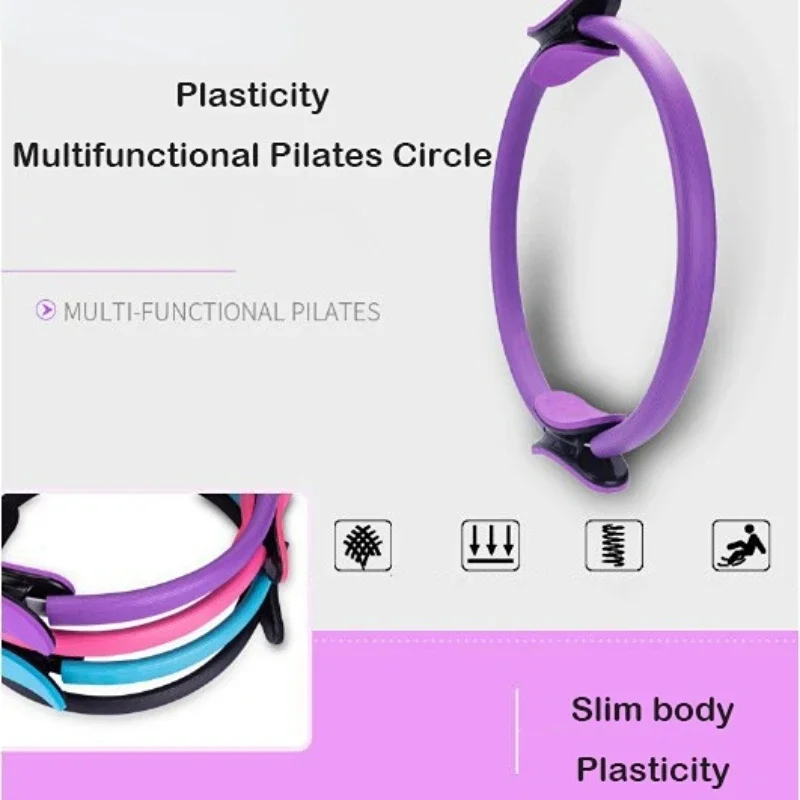
A resistance band covers most upper and lower body exercises, but some movements benefit from a different type of resistance. The Pilates Ring Fitness at £14.99 adds inner thigh and arm work that bands cannot easily replicate. The ring provides constant outward pressure, which is ideal for squeezing movements that target adductors and core stabilisers.
The Thigh Master Home Fitness at £18.99 serves a similar purpose with a different mechanism. The spring-loaded design provides progressive resistance for inner thigh squeezes and chest presses. It is not a complete workout tool on its own, but paired with a resistance band it fills the gaps for targeted muscle work.
For a complete beginner setup under £55, a heavy-duty resistance band plus a Pilates ring gives you enough variety for full-body workouts three times a week without needing a single weight plate.
Where weights beat bands (and whether it matters for you)
Weights provide constant resistance through the full range of motion. A 10kg dumbbell is 10kg at the top, bottom, and middle of a bicep curl. A band might provide 5kg of resistance at the bottom and 15kg at the top. For advanced lifters tracking precise loads, this matters. For beginners building general strength, it does not.
The other advantage of weights is lower body training. Squatting with a band is awkward, and deadlifts with bands feel strange because the resistance spikes at the top rather than building smoothly. If your primary goal is building leg strength and you have space for a barbell, weights are the better tool for that specific job.
But here is the reality check: most beginners do not need to worry about optimal loading curves. They need to build the habit of exercising, learn proper form, and strengthen their stabiliser muscles. Bands do all of this for a fraction of the cost and zero storage requirements.
Building a beginner home gym for under £55
Here is the setup that covers 90% of beginner fitness needs without taking up more space than a shoebox: the 20-230lbs Heavy-Duty Resistance Band (£19.99) for upper body, back, and general strength work. The Pilates Ring (£14.99) for inner thighs, core, and arm toning. A yoga mat (widely available from £10-15) for floor work and comfort.
This covers: push-ups (band-assisted if needed), rows, curls, shoulder presses, lateral raises, inner thigh work, core exercises, glute bridges, and stretching. Three sessions a week, 30 minutes each, rotating through these movements is enough to build noticeable strength and muscle tone in the first 8-12 weeks.
Add the Portable Fascial Massage Gun (£29.99) for recovery if your budget stretches, but it is not essential in the first month. The massage gun becomes more valuable as your training volume increases and recovery becomes a limiting factor.\n\nRelated reading: Pilates at Home: Starter Kit Under £30 · Home Workout Clothes: Affordable Activewear
Featured in this article
Frequently asked questions
Can resistance bands build muscle as effectively as weights?
Yes, for beginners. Resistance bands provide sufficient stimulus for muscle growth in the first 6-12 months of training. The key is progressive overload, increasing resistance or reps over time. Once you can complete 15+ reps easily on the heaviest band, you may want to add weights.
What weight resistance band should I start with?
Start with a medium resistance band that you can complete 10-12 reps with. The 20-230lbs band is versatile because it provides a range of resistance depending on how far you stretch it. Use less stretch for lighter resistance, more for heavier.
How often should beginners work out at home?
Three times a week, 30 minutes per session, is enough to see results in 4-6 weeks. Rest at least one day between sessions. Focus on full-body workouts rather than splitting muscle groups.
Do I need a Pilates ring if I have resistance bands?
Not strictly, but a Pilates ring adds inner thigh and chest exercises that are hard to replicate with bands alone. If your budget is tight, start with just the band and add the ring later.
Product gallery
Further reading