
Massage Gun Recovery: When You Actually Need One and Which Features Matter
Massage guns promise faster recovery and less soreness. But do you actually need one? Here is when percussion therapy makes a difference, what features matter at each price point, and what is marketing fluff.
SHOPTHIVA Editors
The honest answer to 'do I need a massage gun?'
If you exercise three or more times a week, a massage gun will help you recover faster and reduce muscle soreness. If you exercise once a week or less, a massage gun is an expensive way to treat occasional stiffness that stretching and a hot shower would also fix.
The science behind percussion therapy is straightforward: rapid strikes increase blood flow to the targeted muscle, which delivers oxygen and nutrients faster and removes metabolic waste products like lactic acid. This speeds up the recovery process by roughly the same amount as a 15-minute gentle stretching session. The advantage of a massage gun is convenience: it takes 3-5 minutes on the muscles you just worked, and you can do it sitting on your sofa.
The Portable Fascial Massage Gun at £27.99 sits in the affordable category. It does the core job, which is delivering rapid percussion to tired muscles, without the premium price tag of brands like Theragun or Hypervolt.
What features actually matter in a massage gun
The massage gun market is full of specifications that sound important but make no practical difference to most users. Here is what actually matters. Stall force is the amount of pressure you can apply before the motor stops. A stall force of 20-30 lbs is sufficient for most people. You do not need 60 lbs of stall force unless you are a competitive athlete working on dense muscle tissue.
Amplitude is how far the head travels with each strike. 10-12mm is the sweet spot for muscle recovery. Less than that feels like vibration rather than massage. More than that can be uncomfortable on smaller muscles.
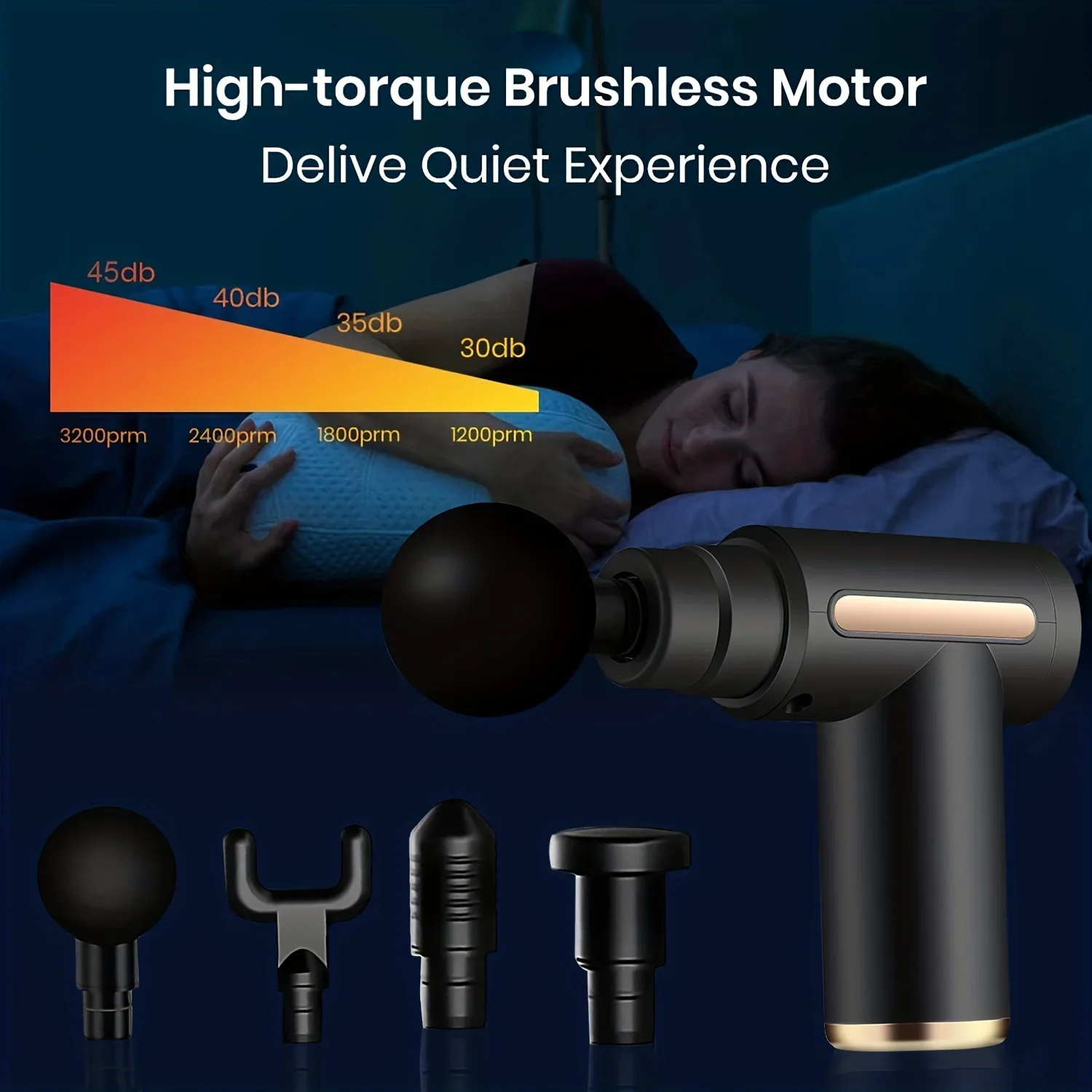
Speed settings should offer at least three levels: low for sensitive areas and recovery (around 1,200 RPM), medium for general use (around 2,000 RPM), and high for dense muscle (around 3,200 RPM). More than five settings is marketing, not function.
Attachment heads matter more than people think. A flat head works for large muscle groups. A bullet head targets specific knots. A fork head is for the Achilles and spine area. The massage gun at £29.99 includes multiple heads, which is the right number. More than four heads in a set means some will never get used.
How to use a massage gun properly
A massage gun is not a 'more pain equals more gain' tool. If you are wincing, you are pressing too hard or using the wrong head. Here is the correct approach. Float the gun over the muscle group you want to treat. Do not press down hard. Let the percussion do the work. Move slowly across each muscle for 30-60 seconds.
Use the flat head for large areas like quads, hamstrings, and calves. Use the bullet head for targeted knots in the shoulder or hip. Never use the massage gun on bones, joints, the neck, or the lower back directly over the spine. These areas have thin tissue over bone, and percussion can cause bruising or nerve irritation.
Timing matters. Use the massage gun within 30 minutes after exercise for the best recovery effect. A second session before bed can help with overnight muscle repair. Do not use it for more than two minutes on any single muscle group in one session.
Portable vs full-size: which do you need?
Full-size massage guns like the Theragun PRO weigh around 1kg and are designed for daily, heavy-duty use by athletes and therapists. Portable massage guns like the one at £29.99 weigh roughly half that and are designed for people who want recovery support without a professional-grade investment.
For home workouts and general fitness, a portable gun is sufficient. The percussion depth is adequate for muscle recovery, the battery lasts for several sessions, and the smaller size means you are more likely to keep it next to the sofa (where you will actually use it) rather than in a drawer (where a full-size gun might end up).
The trade-off is battery life and motor strength. A portable gun will run for 2-4 hours on a charge, versus 5-6 hours for a full-size model. And the stall force is lower, meaning you cannot press as hard before the motor slows. For most people, this is not a problem because you should not be pressing hard anyway.
Who should skip a massage gun entirely
If you have a history of blood clots, deep vein thrombosis, or any vascular condition, talk to a doctor before using a massage gun. Percussion therapy increases blood flow, which is generally beneficial but can be dangerous if you have existing vascular issues.
If you are pregnant, avoid using a massage gun on the abdomen, lower back, and inner thighs. Limited use on the shoulders and calves is generally fine, but consult your midwife or doctor first.
For everyone else, a massage gun at the £30 price point is a reasonable investment if you exercise regularly. It will not replace stretching, good sleep, or proper nutrition, but it does make a measurable difference in how quickly your muscles feel ready to train again.\n\nRelated reading: Football Recovery Massage Gun Review · Pilates at Home: Starter Kit Under £30
Featured in this article
Frequently asked questions
How long should I use a massage gun on each muscle?
30-60 seconds per muscle group per session. Do not exceed two minutes on any single area. More time does not mean more recovery. The percussion effect reaches its maximum benefit quickly.
Can I use a massage gun every day?
Yes, if you are exercising daily. Use it after workouts for recovery. If you are not exercising daily, 2-3 times per week on areas that feel tight or sore is sufficient.
Is a £30 massage gun as effective as a £300 one?
For general muscle recovery, yes. The core mechanism is the same: a motor drives a piston that delivers percussion. Premium guns have stronger motors, longer battery life, and quieter operation, but the recovery effect is similar for most users.
Should a massage gun hurt?
No. Percussion therapy should feel like a deep massage, not pain. If it hurts, reduce the speed, use less pressure, or switch to a softer attachment head. Pain means you are causing tissue damage, not helping recovery.
Product gallery
Further reading