

What Is a Fan Makeup Brush? How to Use One for Highlighting and Setting Powder
It's the brush everyone owns and half of us aren't sure how to use. Here's what a fan brush actually does, when to reach for it, and why the shape matters more than the price tag.
SHOPTHIVA Editors
Quick takeaways
A fan brush is for light application. It picks up less product than a dense brush, so it's ideal for jobs where you want a whisper of colour - highlight, bronzer, or setting powder - not full coverage.
The shape does the work. The thin, fanned-out bristles naturally deposit product in a broad, even sweep. You don't need much technique to get a soft finish; the brush won't let you overdo it.
Price and quality don't always match. Synthetic bristles perform nearly identically to natural hair for fan brushes, so a well-made £3 brush can sit comfortably alongside brushes costing ten times as much.
What a fan brush actually is
A fan brush is exactly what it sounds like: bristles arranged in a flat, semi-circular spread that opens like a handheld fan. It's thin when viewed from the side and wide when viewed from the front. That shape isn't decorative - it's the whole reason the brush works the way it does.
Because the bristles are widely spaced and sit in a single thin layer, the brush picks up far less powder than a kabuki or a blush brush. That makes it wrong for foundation but near-perfect for any product you want to apply lightly. Most fan brushes today use synthetic fibres - nylon or taklon - which are soft, easy to clean, and don't trap product the way natural hair can.
The Rose Golden Fan Makeup Brush (£13.99) is a typical example: rose gold ferrule, dense synthetic bristles, wide enough to cover a cheekbone in one pass. It's not a precision tool - it's a diffusion tool. That distinction matters when you're deciding which brush to reach for.
How to use a fan brush for highlighting
This is the fan brush's headline act. Swirl the tips lightly into a powder highlighter, tap off the excess (fan brushes hold very little, so one tap is enough), then sweep in a soft arc across the top of your cheekbone. The brush naturally feathers the product so you get a glow, not a stripe.
You can use the same technique on the bridge of your nose, your cupid's bow, and just under the brow arch. Because the brush deposits so little at a time, it's forgiving - you can build up in layers without ever hitting the 'disco ball' look. That makes it especially useful if you're new to highlighter or working under harsh lighting.
One thing worth knowing: matte highlighters work better with fan brushes than shimmer-heavy ones. The sparse bristles can struggle to grab chunky glitter particles evenly. A finely milled powder - or a baked highlighter - gives the smoothest result. Browse more options in our beauty collection.
Using a fan brush for loose setting powder
A fan brush applies setting powder so thinly you'll barely see it - and that's the point. Load the tips, tap firmly, then sweep lightly across your T-zone and under your eyes. The brush drops just enough powder to set your makeup without adding texture or caking.
If you have dry or mature skin, this is the method to try. Dense powder brushes can grab too much product and settle into fine lines. A fan brush avoids that problem entirely because it physically can't hold enough powder to over-apply. It's also excellent for dusting off excess - after baking, or after you've gone a bit heavy-handed with bronzer, a clean fan brush can sweep away the surplus without disturbing the makeup underneath.
One practical tip: keep a second, identical fan brush for powder only. Using the same brush for highlighter and powder means residual shimmer ends up where you don't want it - across your forehead at 11am. For £3, owning two isn't extravagant.
Fan brush vs other brushes: when to use which
Makeup brushes aren't interchangeable, and a fan brush isn't a replacement for your everyday tools. Here's how it compares to the brushes you probably already own, and when each one earns its spot:
Fan brush vs kabuki brush. A kabuki is dense and round - built to buff foundation or powder into the skin. It grabs a lot of product and distributes it evenly through circular motion. A fan brush is the opposite: light touch, single-direction sweeps, no buffing. Use the kabuki for coverage; use the fan for finishing.
Fan brush vs blush brush. A blush brush is angled or tapered to deposit colour precisely on the apples of the cheeks. It holds more product and applies it more intensely. If you want a soft wash of bronzer rather than a defined contour, a fan brush can do that too - but for proper blush placement, stick with the blush brush.
Fan brush vs angled contour brush. An angled brush gives you control; a fan brush gives you diffusion. For sharp cheekbone definition, reach for the angled brush. For a gentle, all-over warmth, the fan brush works - just sweep it along the hairline, jawline, and under the cheekbones.
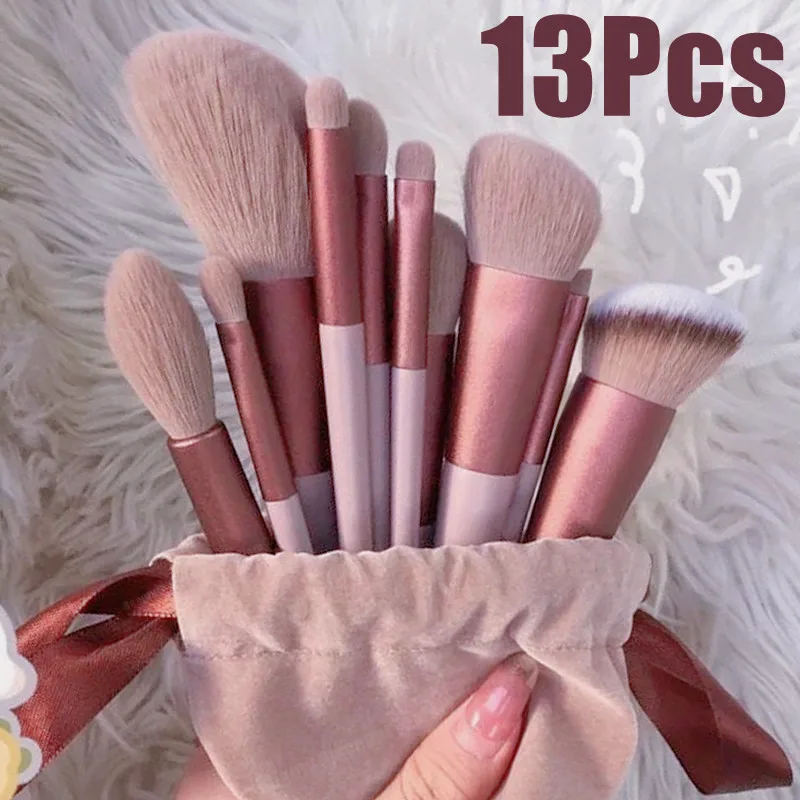
If you're building a basic kit, a 13-piece brush set (£4.53) covers all of these shapes in one go - including a fan brush. For under a fiver, it's a sensible way to try multiple brush types without committing to individual purchases.
Is a £3 fan brush actually worth it?
Short answer: yes, and here's why. Fan brushes have fewer bristles per square centimetre than almost any other brush type. That means the material quality matters less - there's simply less of it to get wrong. A well-assembled synthetic fan brush at £3 will perform 90% as well as a £25 one from a premium brand.
The two things to check are ferrule stability (the metal band connecting bristles to handle - it shouldn't wobble) and bristle shedding (run it over the back of your hand a few times before first use). The Rose Golden Fan Brush (£3.10) has a rose gold ferrule and densely packed synthetic bristles - standard construction for this category, and at this price you can replace it annually without a second thought.
What you don't get at £3 is a weighted handle or a fancy wooden grip. If those matter to you, spend more. But for the actual job a fan brush does - depositing a whisper of powder - the performance difference between budget and luxury is smaller than for any other brush in your kit.
Care matters more than cost. Wash a fan brush gently with mild soap, reshape the bristles while damp, and dry it flat. Synthetic bristles dry faster than natural hair and don't need conditioning. Do that every two weeks and even a £3 brush will last a year of daily use. Related reading: Do LED Face Masks Actually Work? What the Science · Eyeliner Brush vs Eyebrow Brush: What's the Differ
Featured in this article
Frequently asked questions
Can I use a fan brush for foundation?
No - a fan brush is too sparse to blend liquid or cream foundation evenly. It's designed for powder products that need a light touch, not coverage. Use a flat foundation brush or a damp sponge instead.
How often should I clean a fan makeup brush?
Every one to two weeks with mild soap and lukewarm water. Synthetic bristles dry quickly - reshape while damp and lay flat. Regular cleaning prevents product buildup that can make the bristles stiff and uneven.
Product gallery
Further reading